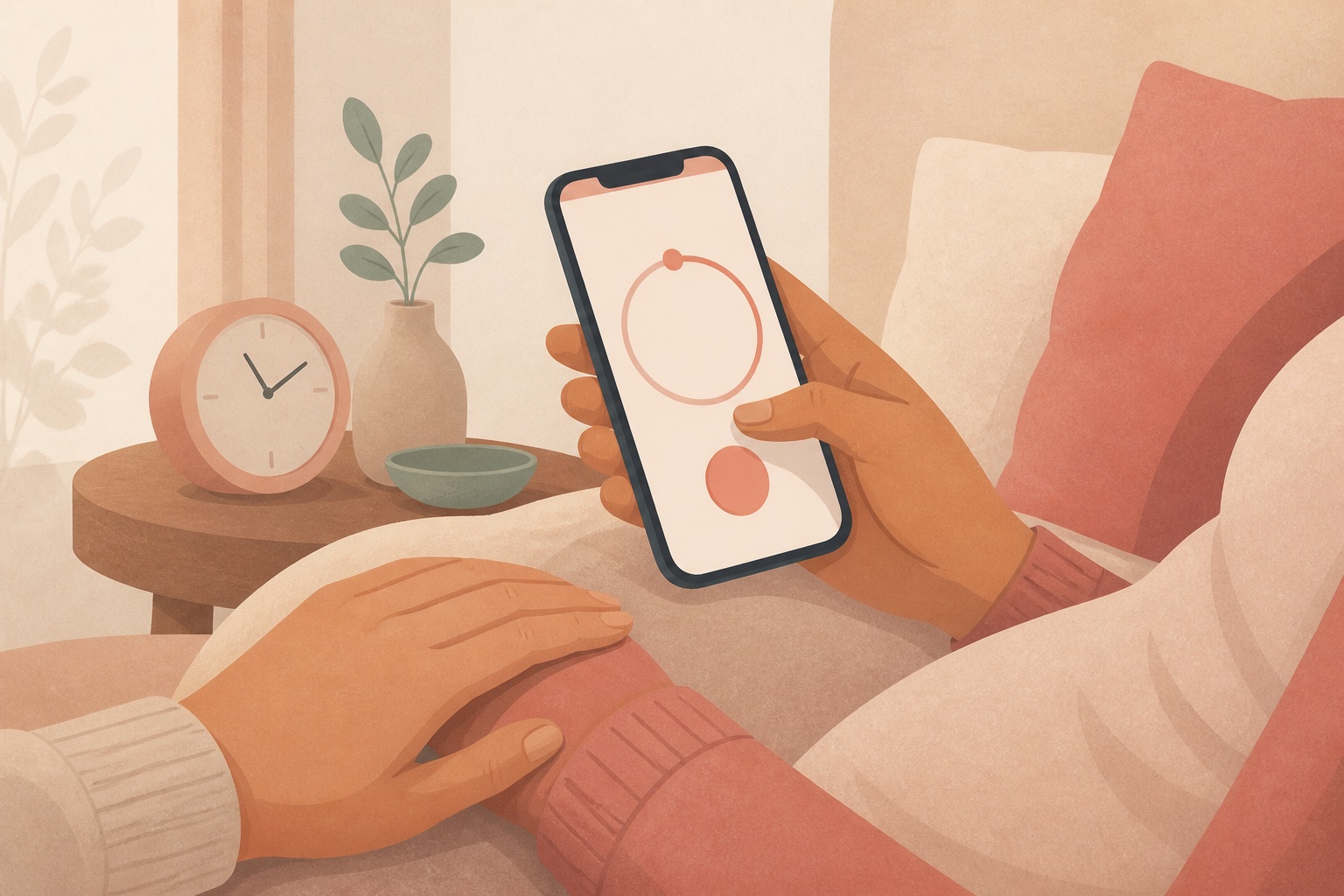
Duration runs from the beginning to the end of one contraction; frequency usually runs from the beginning of one to the beginning of the next.
Two measurements, one simple routine
Timing contractions is mostly about recording two different measurements consistently. Duration answers “How long did this contraction last?” Frequency answers “How much time passed from the start of one contraction to the start of the next?”
A consistent method matters more than watching every second perfectly. If you miss one contraction, continue with the next clear beginning instead of guessing a timestamp.
A step-by-step way to time
Use the same device and the same person when practical. Keep the timer open, but do not let recording get in the way of comfort, movement, breathing, or contacting the care team.
- Start when the contraction clearly begins.
- Stop when the contraction has clearly eased or ended.
- Let the timer calculate duration and start-to-start frequency.
- Continue for several contractions so a pattern—not one event—becomes visible.
- Share the record with the care team if they ask for it.
What the pattern can—and cannot—tell you
ACOG explains that contractions in true labor tend to follow a regular pattern, move closer together, last around 60 to 90 seconds, and become stronger. But timing alone cannot confirm labor. Sometimes an examination is needed, and an individual care plan can recommend calling sooner than a general timing pattern.
The timer should organize observations, not interpret every sensation. Notes such as whether contractions continue with rest or movement may help a conversation with the care team, but they do not replace that conversation.
When not to wait for the timer
Contact your obstetric care provider whenever you think labor may have begun or you are unsure. ACOG advises going to the hospital for signs including water breaking without contractions, heavy vaginal bleeding, constant severe pain without relief between contractions, or noticeably reduced fetal movement. If you are under 37 weeks and have signs of labor, contact the care team right away.
Follow the urgent-care instructions provided by your own care team. If something feels wrong, seek help rather than waiting for any app threshold.